
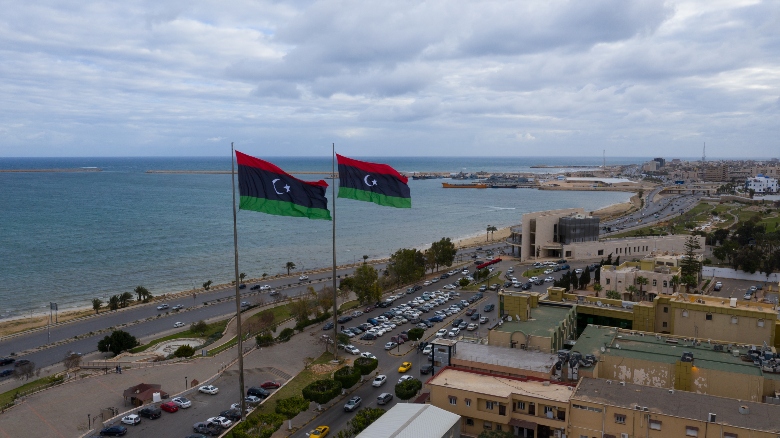
Travel to Libya is still one of the great discoveries of the Mediterranean. Few countries bring together, within a single journey, Roman cities facing the sea, Greek temples on green hills, a whitewashed oasis town and the vast silence of the Sahara. Libya has all of these, along with a long coastline and a tradition of hospitality that visitors remember long after they leave. Because it remains far from the usual tourist routes, it is often called North Africa's best-kept secret. From our base in Tripoli, our team has prepared this overview to help you understand what the country offers and how to plan a calm, well-organised trip.
Tripoli and the Mediterranean coast
Most journeys begin in Tripoli, a capital that looks out over the sea. Its old city, the medina, is a maze of lanes, souks, mosques and old houses where traders still sell copper, silver, fabrics and spices. Close to its edge stand the Arch of Marcus Aurelius, a reminder of the Roman city that once stood here, and the Red Castle, the historic fortress overlooking Martyrs' Square. An evening walk along the seafront, followed by tea or a meal of fresh fish, is a gentle way to start your stay.
Beyond the capital, the Libyan coast stretches for a long distance along the Mediterranean, with quiet beaches, fishing harbours and small towns. Many visitors are surprised by how much of this shoreline is still unspoiled, far from the large resorts found elsewhere in the region.
Ancient cities: Leptis Magna, Sabratha and Cyrene
Libya is home to some of the finest classical sites in the Mediterranean. East of Tripoli, near Al Khums, Leptis Magna is one of the most complete Roman cities anywhere, with its great arch, forum, basilica, baths, theatre, market and harbour. It was the birthplace of Emperor Septimius Severus and has been a UNESCO World Heritage site since 1982.
West of the capital, Sabratha is famous for its theatre, whose tall stage wall rises against the blue of the sea, as well as its temples and mosaics. In the east, Cyrene was founded by Greek settlers in the hills of the Green Mountain, a region of forests, valleys and cooler air. Its temples, sanctuaries and tombs, scattered across a landscape of great beauty, make it one of the most moving archaeological sites in North Africa. Both Sabratha and Cyrene are also inscribed on the UNESCO World Heritage List.
Ghadames, the Acacus and the Sahara
To the south-west, close to the borders with Tunisia and Algeria, the old town of Ghadames is often called the pearl of the desert. Its covered alleys, rooftop walkways and houses with whitewashed, brightly decorated interiors show how people built cleverly to live with the desert heat. The old town is a UNESCO World Heritage site and a highlight for anyone interested in architecture and Saharan life.
Further south, the Acacus mountains offer one of the most striking landscapes of the Sahara: dark rock formations, natural arches and golden dunes. Their cliffs and shelters preserve prehistoric rock paintings and engravings that tell of a time when the region was green and full of wildlife. Nights under the stars, tea by the fire and the stillness of the dunes are experiences that stay with travellers for a lifetime. Desert journeys need careful preparation, experienced drivers and licensed guides, which is exactly what a local agency provides.
Hospitality and the best time to visit
What many visitors remember most is the welcome. Whether in an Amazigh village in the mountains, a Bedouin tent or a family home in the city, guests are greeted with tea, dates and generous meals. Libyan cuisine reflects the country's Mediterranean and Saharan roots, with dishes such as couscous, bazeen and grilled fish.
The best seasons for travel to Libya are spring and autumn, when the weather is pleasant for exploring archaeological sites and the coast. Winter is also a good time for the desert, though nights can be cold, while summer brings strong heat, especially in the south.
Practical advice for planning your trip
A trip to Libya is easier and more rewarding when it is prepared with a licensed local agency. Here is what our team recommends:
- Foreign visitors generally need a visa, which is arranged through a licensed travel agency; check the current requirements with our team well in advance.
- Travel with licensed local guides and drivers, especially for archaeological sites and the desert.
- Follow the advice of your agency on itineraries and local conditions throughout your stay.
- Respect local customs: dress modestly, ask before photographing people and be mindful during prayer times and Ramadan.
- Plan your route around the seasons, keeping the desert for the cooler months.
- Allow enough time: distances are long, and the country rewards those who travel slowly.
Our team can combine these destinations into a tailor-made itinerary, from a short city break in Tripoli with a day at Leptis Magna to a longer journey that includes the Green Mountain, Ghadames and the Sahara. We take care of hotels, transfers, vehicles and guides so that you can focus on the discovery.
Ready to discover Libya, North Africa's best-kept secret? Contact our team at Asfar Booking and we will help you design a journey that matches your interests, your pace and the size of your group.