
Itinerary No. 05 AAT – Ghadames

Itinerary No. 05 AAT – Ghadames

Tripoli, Libya
Duration8 days · 7 nights
Price from$1,050 / person
LocationTripoli, Libya

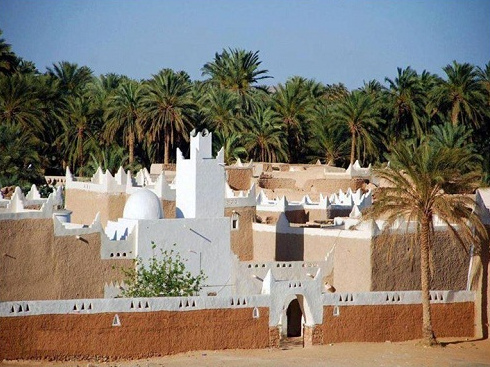
Travel the Sahara’s edge the way early pioneers did on this 8-day journey to Ghadames, the jewel of the desert. Starting in Tripoli, the route takes you through Roman ruins, Berber villages in the Nafusa Mountains and the oasis town of Ghadames, before returning to the coast for an in-depth visit to Leptis Magna.

The programme combines archaeology, Amazigh (Berber) culture and desert landscapes, making it a rewarding choice for travellers interested in Libya’s history and traditions. It ends with a visit to the Tripoli museum before your departure. Two full days are devoted to Leptis Magna, giving you time to take in the site at a relaxed pace. As shown in the programme, breakfast and dinner are included on the Ghadames day and breakfast on the final day.

Highlights

  • The ruins of Sabratha and Qasr al-Haj
  • Berber culture in the Nafusa Mountains
  • Ghadames, the jewel of the desert
  • Nalut
  • Two days at Leptis Magna
  • The Tripoli museum

Program

  1. Day 1 Day 1: Arrival in Tripoli

    On arrival in Tripoli, you will be met by your local guide. You will be transferred to your hotel to check in and relax. Depending on your arrival time, you may wish to visit the city centre before enjoying your evening meal at one of Tripoli’s lively restaurants.

  2. Day 2 Day 2: Sabratha ruins and Qasr Al-Haj

    After breakfast, you will set off for Sabratha, which is situated on the coast, about an hour’s drive west of Tripoli. Sabratha is said to be one of the best-preserved ancient Roman sites in the world today, and boasts one of the finest theatres of antiquity. After lunch at a local restaurant, you’ll head south-west towards the Jabal Nafusa mountain range to visit Qasr al-Hajj: an unusual circular fortified granary. In the early evening, you’ll make your way up a cliff to a sprawling Berber village called Yafrin to spend the night.

  3. Day 3 Day 3: Berber culture in the Nafusa Mountains

    You will set off early in the morning and travel through the Nafusa Mountains, a landscape of arid mountains and rocky cliffs, home to the Libyan Berber community (also known as the Amazigh). Your first stop will be Tormisa – an abandoned stone village situated on a rocky outcrop overlooking the Jafara Plain. There are numerous tunnels, oil-pressing passages and exploration chambers, as well as a mosque. You will then drive on to Kabao; a charming Berber community situated on the slope of a hill, with a magnificent grain store forming the focal point of the village. Lunch will be served nearby, and the journey will continue southwards in the afternoon as the mountainous terrain begins to give way to the epic harshness of the desert, which stretches from northern Libya to the heart of the African continent. Upon arrival in Ghadames in the early evening, you will be transferred to your hotel for a two-night stay.

  4. Day 4 Day 4: Ghadames, jewel of the desert (B, D)

    Ghadames is one of the most prominent caravan trading towns anywhere in the desert and is the highlight of this tour. On the morning of the first day of your stay, you’ll be taken on a guided tour of the now-abandoned old town, wandering through the labyrinthine alleyways, tropical gardens and ancient squares. The women of Ghadames lived a secluded life. Their domain was the home, which they decorated intricately with red paint, and they only ventured down to street level at prayer times. Only a network of interconnected rooftops allowed them to move freely from house to house. A traditional lunch will be cooked in one of the old houses. Relax or browse the shops in the afternoon, and in the early evening, drive out into the desert to visit the ruined remains of Ras al-Ghul, surrounded by sand dunes and overlooked by the sand dunes of Tunisia and Algeria.

  5. Day 5 Day 5: Nalut

    You will return to Tripoli via a different route through the Nafusa Mountains, stopping at Nalut. Nalut is the largest Berber community and is home to an exceptional Berber granary perched on the edge of a mountain, offering magnificent views over the plains below. The palace is the focal point of the village; the houses, the oil press and the mosque were left empty in 1960 when New Nalut was built around them. The local community has worked hard to keep local traditions alive through handicrafts, and several rooms are open to the public, displaying the earthenware storage jars that once held barley, dates and oil. It is a long journey, and you will arrive in Tripoli in the early evening in time for dinner at a local restaurant or at your hotel.

  6. Day 6 Day 6: Leptis Magna

    He will spend the whole day in Libda Magna, an hour’s drive from Tripoli. The site is extensive, and after a guided tour, there will be time to explore it at your own pace. Benefiting from the patronage of the founder of the African Roman imperial dynasty, Emperor Septimius Severus (born 146), Leptis Magna Magna was a city of extraordinary imperial splendour – and remains a place of immense magnificence. The sand that engulfed the site in the early modern period prevented looting and preserved its splendour. The day will also include a visit to the stunning amphitheatre – a wonderful spot for a stroll. You will drive to a hotel not far from the site for dinner and an overnight stay

  7. Day 7 Day 7: Leptis Magna revisited

    You can visit Leptis Magna again in the morning and then drive a short distance to see the magnificent mosaics at Villa Sileen (if it’s open – it’s currently undergoing restoration). You’ll then be taken back to Tripoli, stopping, if you wish, at one of the many stalls selling honey, olive oil and rose water along the way. If there’s time, you can take a stroll through the old town to explore the mosques, markets and charming narrow streets, and stop for a mint tea at Green Square, the central meeting place for Tripoli’s residents and the gateway to the market. A farewell dinner will be served at the Tripoli Al-Jee restaurant.

  8. Day 8 Day 8: Tripoli Museum and departure (B)

    The Museum of Opportunities in Tripoli. It houses a wide range of artefacts from all periods of Libya’s rich history, including one of the world’s most famous collections of classical art. The numerous exhibition galleries feature mosaics, sculptures and works of art from each of the sites visited during the week. Return home

Request a booking

Send your dates and we will reply with availability and the final price in USD.

How would you like to pay? You receive the payment details by email. Pay only after our confirmation.

Ask on WhatsApp

WhatsApp